New Zealand
Waitomo Glowworm Caves
- On New Zealand's North Island near Hamilton, the Waitomo Caves system formed over 30 million years as underground streams dissolved limestone bedrock, creating labyrinths of passages, chambers, and underground rivers decorated with stalactites, stalagmites, and flowstone formations.
- What makes Waitomo globally unique is not the geological formations (impressive but found elsewhere) but the resident population of Arachnocampa luminosa—glowworms endemic to New Zealand that create bioluminescent displays rivaling the night sky.
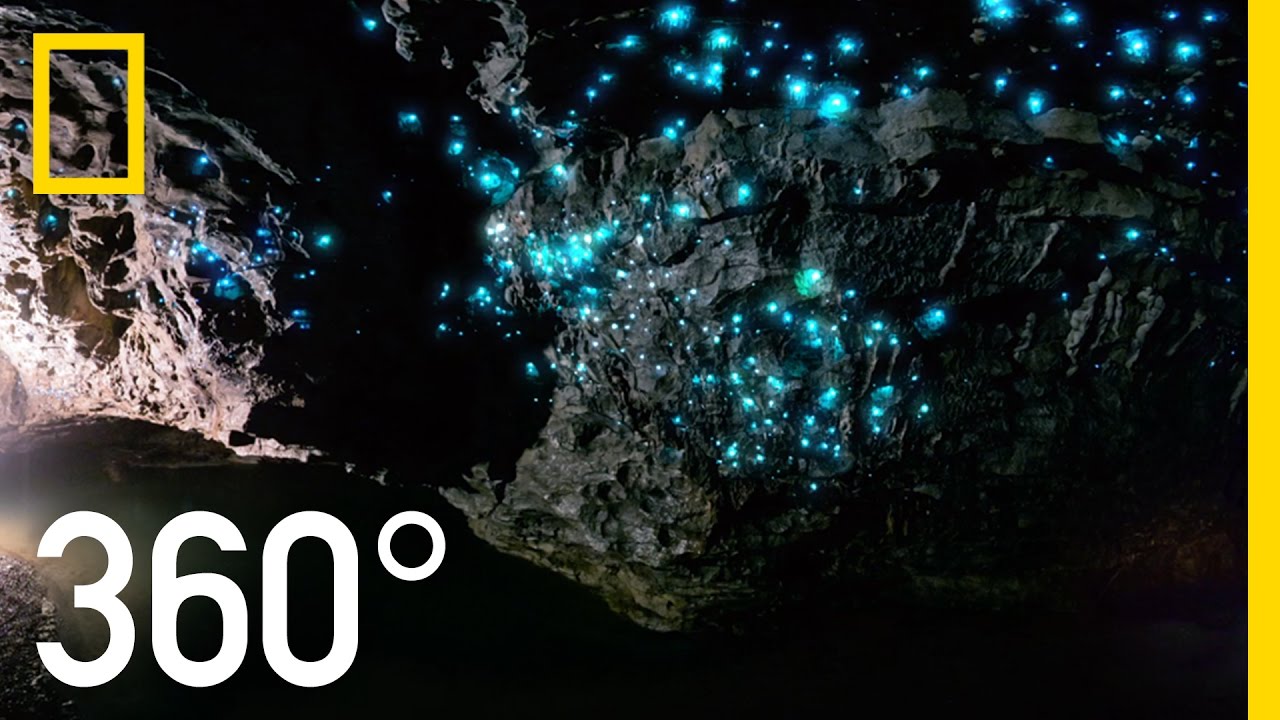
- These insect larvae (actually fungus gnat larvae, not true worms) hang silk threads from cave ceilings coated with sticky mucus droplets, then emit blue-green light from specialized organs to attract flying insects.
- The prey, drawn to the "glow," become ensnared in the sticky threads and are consumed.
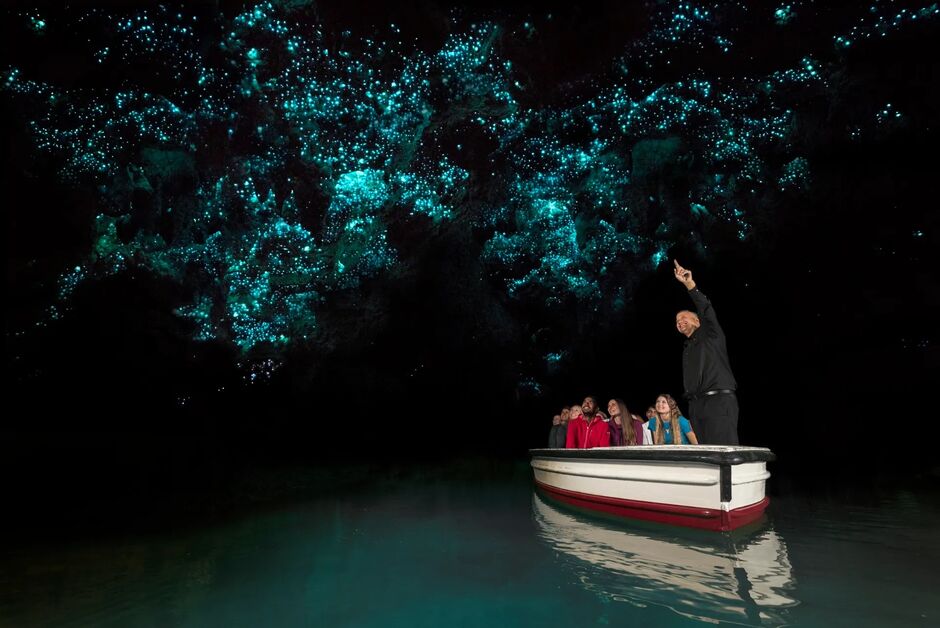
- In Waitomo's Glowworm Grotto chamber, thousands of these larvae create a living galaxy—the absolute darkness amplifies their light into the illusion of stars across the ceiling.
- Visitors board small boats for silent drift through the underground stream, looking up at the "night sky" created by glowworms, while the only sound is water dripping from stalactites.
- The effect is ethereal, almost hallucinatory—your brain struggles to reconcile being underground yet seeing what appears to be the cosmos overhead.
- The Waitomo area contains three main commercial caves: Waitomo Glowworm Caves (famous for the boat ride through Glowworm Grotto), Ruakuri Cave (spiral entrance descending 15m, underground stream with glowworms and impressive limestone formations), and Aranui Cave (smallest but most intricate stalactite formations, fewer glowworms).
- Beyond commercial caves, adventure caving companies offer black water rafting—floating through underground rivers on inner tubes, rappelling into caves, and exploring passages closed to general tourists.
- The caves maintain constant 14°C temperature and 95% humidity year-round.
- The surrounding Waitomo region features limestone landscape—sinkholes, natural bridges, and karst valleys characteristic of carbonate rock erosion.
- Māori legends tell of when chief Tane Tinorau and wife Hotu first explored these caves using candles, discovering the glowworms and naming the area Waitomo ("wai" = water, "tomo" = hole/sinkhole).
Watch it
Who Visits
- International tourists (70%), domestic New Zealand visitors (30%), photographers (limited—photography restricted in caves to protect glowworms), families, nature enthusiasts.
- Demographics extremely diverse—all ages, accessible for children 4+ and elderly.
- Strong Asian (Chinese, Japanese), Australian, European, American tourism.
- Annual visitors approximately 500,000, distributed year-round (glowworms present always, though humidity and insect availability affect glow intensity).
- Peak season December-February (summer); winter (June-August) brings cold surface temperatures but caves remain constant.
How to Get There
- Easy. From Auckland (2.5 hours drive, 200km south via State Highway 1 and
- or Rotorua (1.5 hours, 75km west), reach Waitomo village. Tour buses, rental cars ($40-80/day), or organized day trips ($150-250 from Auckland, including cave entry and transport) all viable. Waitomo village is tiny—hotels, motels, backpackers ($30-200/night), cafés, and cave tour offices comprise the town. Book cave tours online in advance (recommended, especially December-February) or at visitor center upon arrival. Waitomo Glowworm Caves (most famous): 45-minute guided tour including cathedral chamber (acoustics so good concerts are held here—Dame Kiri Te Kanawa performed), limestone formations tour, and climactic 10-minute boat ride through Glowworm Grotto (silent, no photos, magical); NZ$56 ($34) adults, NZ$25 ($15) children. Ruakuri Cave: 2-hour tour with more geological focus and adventure (underground stream walking); NZ$87 ($53) adults. Aranui Cave: 1-hour tour emphasizing formations; NZ$56 ($34). Combination tickets available. Mobile coverage in village, none in caves. Medical facilities in Te Kuiti (20 minutes); hospital in Hamilton (1 hour). English spoken universally. Accessible year-round; caves are constant temperature (warm layers recommended—14°C feels cool).
Best Time to Visit
- All ages including families with young children (4+), elderly, mobility-limited visitors (Ruakuri fully accessible), nature enthusiasts, international tourists seeking iconic New Zealand experience, photographers (limited opportunities but boat ride compositionally challenging), adventure travelers (black water rafting).
- One of New Zealand's most universally accessible natural wonders.
Risk & Safety
- VERY LOW for commercial tours; MODERATE for adventure caving.
- Commercial cave tours are extremely safe—well-lit pathways, handrails, guides, regular inspections.
- Risks: Slippery wet surfaces (wear provided grippy shoes), low ceiling clearances (watch head), cool temperatures (mild discomfort, not dangerous), claustrophobia (caves are spacious but some feel confined—claustrophobes should research beforehand).
- Perfect for families with children 4+ and seniors—safe, engaging, educational, minimal physical demands.
- Black water rafting risks: Cold water (hypothermia if inadequate wetsuit), rappelling injuries (rare—guides manage), bumping into rocks while floating (bruises common), claustrophobia in tight passages.
- Not recommended for: pregnant women, individuals with heart conditions, severe claustrophobes (commercial tours acceptable, adventure caving not), children under 12 (adventure caving age limits apply).
- Glowworm conservation: Flash photography harms glowworms—respect photography restrictions; talking loudly disturbs them—maintain silence in glowworm sections.
- New Zealand's tourism safety standards are world-class—commercial operations maintain excellent safety records.
Pictures (8)
Unique Experiences
- Glowworm Grotto Boat Ride (Classic Experience): The signature Waitomo experience requires joining guided tour (no independent access) leading through cave passages viewing stalactites and stalagmites (interesting but secondary), then descending to underground stream where small flat-bottom boats (holding 10-15 people) await. Board silently (noise disturbs glowworms), push off, and the guide pulls the boat along a wire stretched across the ceiling, propelling you into absolute darkness. As eyes adjust, the ceiling "ignites"—thousands of blue-green lights like stars in incredibly dense constellations. The silence amplifies the effect—only water dripping and the boat's gentle movement. The 10-minute drift feels both longer (time distorts in the darkness and wonder) and shorter (ends too quickly). Photography prohibited (camera flashes disturb glowworms and ruin the darkness for others). The experience is genuinely magical, even for jaded travelers—that moment when the glowworm "sky" first becomes visible consistently evokes gasps. Tips: Sit toward the boat's middle for best overhead views; allow full 5 minutes for eyes to dark-adapt; resist temptation to use phone lights; book first tour (9am) when glowworms are brightest after night hunting.
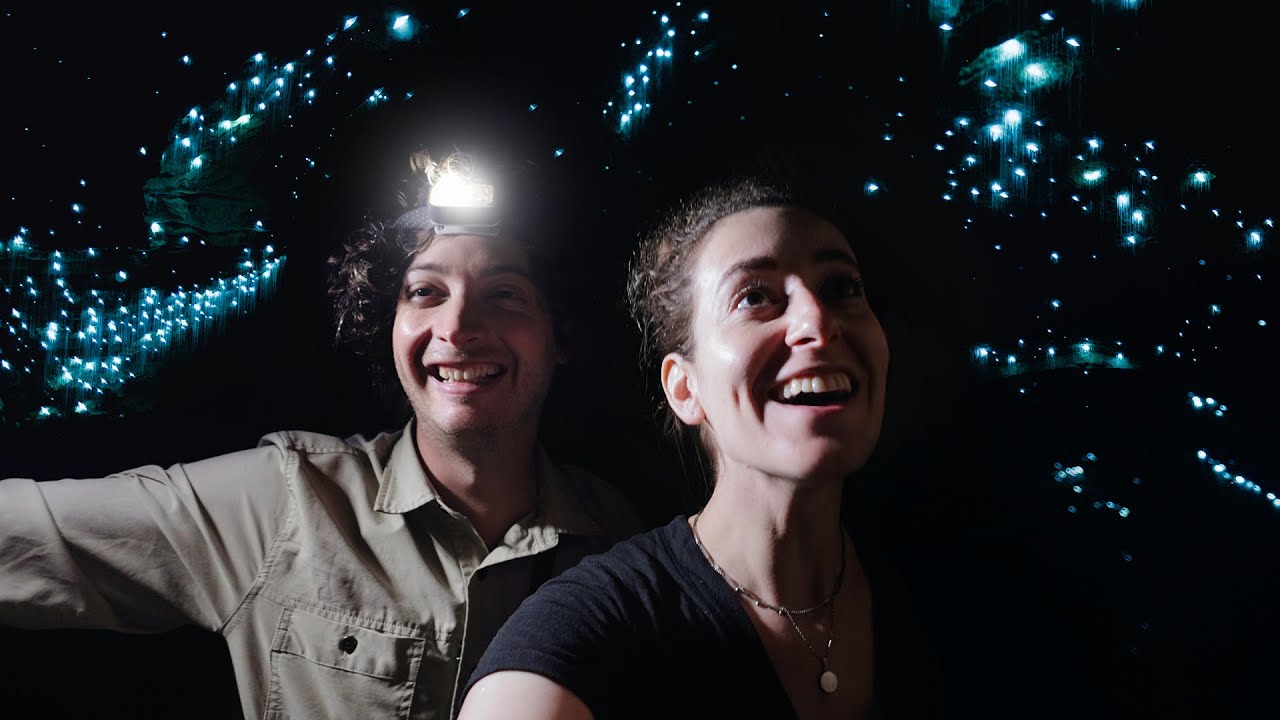
- Black Water Rafting Adventure (Adrenaline Alternative): For visitors seeking more than passive touring, operators like The Legendary Black Water Rafting Co. offer tubing expeditions (NZ$168-228/$100-140, 3-5 hours) through Ruakuri Cave's river system. Suit up in wetsuits, boots, helmets with headlamps, and harnesses. Rappel backward into cave entrance (12m drop—thrilling introduction), trek through passages, then launch into underground river on inner tubes, floating backward (optimal position for viewing glowworms on ceiling) through pitch-black passages illuminated only by glowworms and headlamps (which you turn off in glowworm sections). The water temperature (10-12°C) feels cold despite wetsuits; the adventure combines caving, floating, scrambling, and jumping off underground waterfalls (3-meter drops, optional). The glowworm viewing differs from the commercial boat ride—you control duration (float slowly under concentrations), get closer to the lights, and experience them as part of adventure rather than theatrical presentation. Requirements: Reasonable fitness, comfort in cold water, minimum age 12-16 depending on tour level. Multiple tour options from gentle to extreme.
- Ruakuri Cave Extended Natural Tour: For those wanting both glowworms and extensive geological features, Ruakuri's 2-hour tour provides the best balance. The spiral entrance—16m descent through drum-shaped concrete structure—creates dramatic beginning. The tour covers 1.6km of passages featuring "Hollow Mountain" chamber (huge void carved by ancient river), underground streams you walk alongside or over on suspended walkways, complex stalactite/stalagmite formations taking millions of years to form, and multiple glowworm colonies. The guide explains cave formation processes, glowworm life cycle, Māori history (the cave was sacred burial site—archaeological excavations found human remains), and karst geology. The tour is wheelchair accessible (New Zealand's first)—the entire route has smooth walkways and gentle slopes, making it perfect for mobility-limited visitors who still want comprehensive cave experiences.
- Waitomo Caves Acoustic Experience: The Cathedral chamber in Waitomo Glowworm Caves possesses extraordinary natural acoustics—29-meter ceiling with smooth limestone walls creates nearly perfect reverberation. The guides demonstrate by singing or playing instruments—the sound fills the space, sustaining for seconds after the source stops. Historically, Dame Kiri Te Kanawa (famous New Zealand opera soprano) performed here; occasional concerts still occur (check schedules, tickets NZ$80-150/$50-90). During regular tours, guides always sing or invite musically talented visitors to perform—experiencing how the cave amplifies and beautifies sound adds auditory wonder to visual beauty. The Māori traditionally used this chamber for ceremonies, understanding its acoustic properties enhanced spiritual practices.
- Waitomo Walkway and Surface Karst Exploration: Between cave tours, explore the free Ruakuri Reserve walkway (30-45 minutes, easy loop through native bush and limestone landscape) featuring surface karst formations—sinkholes, natural tunnels, and limestone outcrops where you can observe the processes that created the underground caves. The walkway includes views into Ruakuri Cave's natural entrance (a massive limestone overhang used by Māori). Native bush hosts New Zealand birds—tui, bellbirds, fantails, wood pigeons. The walk provides surface context for underground experiences and exercises legs after sitting in boats/vehicles.