Jordan
Wadi Rum Desert
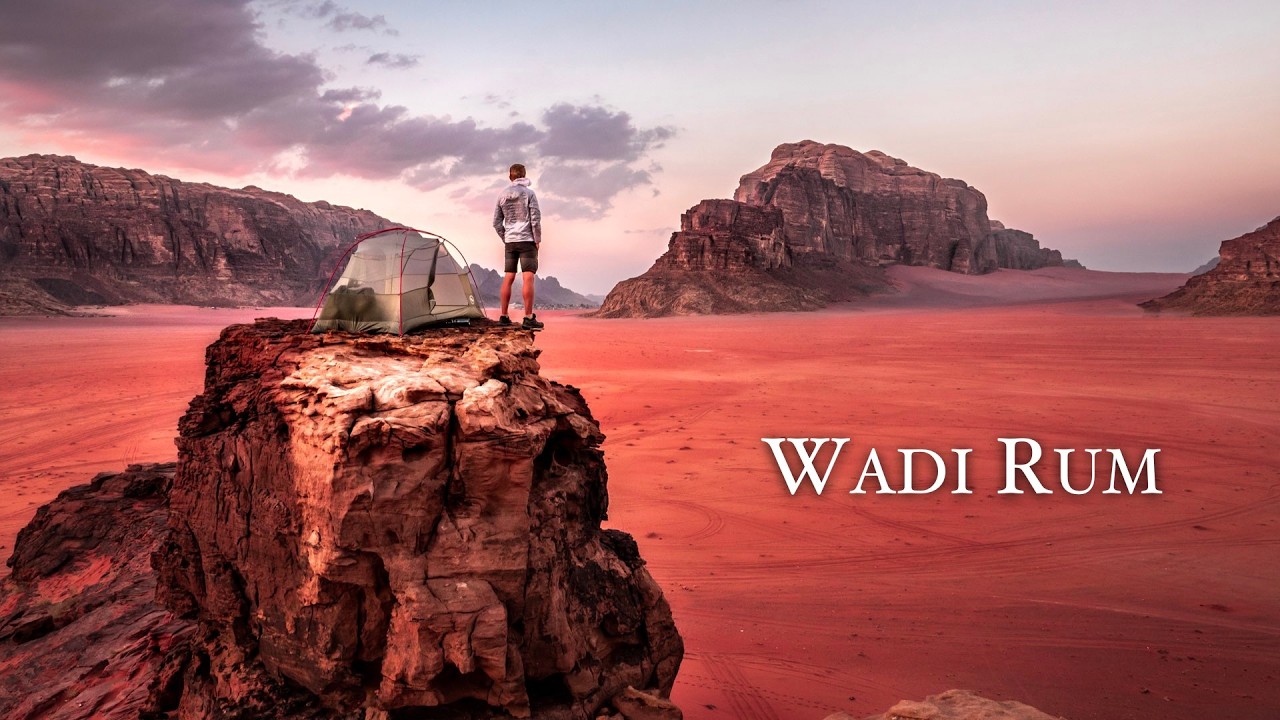
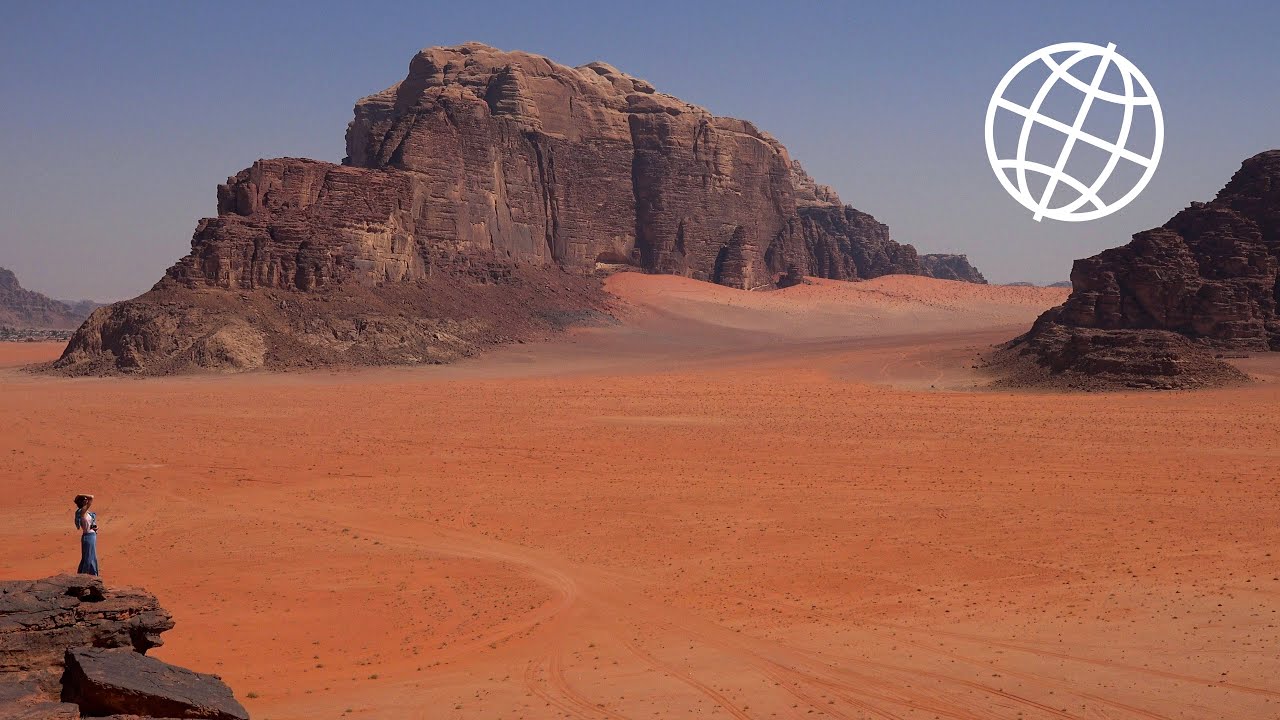
- In southern Jordan near the Saudi Arabian border, Wadi Rum ("Valley of the Moon") spreads across 720 square kilometers of protected wilderness—a dramatic desert landscape where massive sandstone and granite mountains rise 750 meters from flat sandy valleys (wadis), creating a Mars-like terrain that has doubled for alien planets in films including "Lawrence of Arabia," "The Martian," and "Dune." The rock formations—sculpted by millennia of wind erosion—take fantastic shapes: natural arches (Burdah Rock Bridge spans 35 meters at 35m elevation, accessible via scrambling), mushroom rocks balancing on narrow pedestals, narrow slot canyons (Khazali Canyon's walls contain 4,000-year-old Thamudic inscriptions and rock art), and sheer cliff faces displaying layers of crimson, ochre, and rust.
- The desert floor alternates between fine red sand perfect for dune climbing and harder packed earth scattered with desert plants (adapted to receive less than 100mm annual rainfall).
- The Bedouin—indigenous nomadic tribes—have inhabited Wadi Rum for millennia, maintaining traditional lifeways even as tourism has brought economic opportunities.
- Many Bedouin now operate tourism camps, offering overnight stays in goat-hair tents or modern "martian" bubble tents, serving traditional meals (zarb—meat and vegetables cooked underground in heated sand), and guiding 4WD or camel tours.
- The area holds spiritual significance: Jebel Rum (1,754m, Jordan's second-highest peak) was named by Bedouin for its resemblance to a camel hump; Lawrence of Arabia traversed here during the Arab Revolt (1916-18); and the silence and scale evoke transcendent experiences.
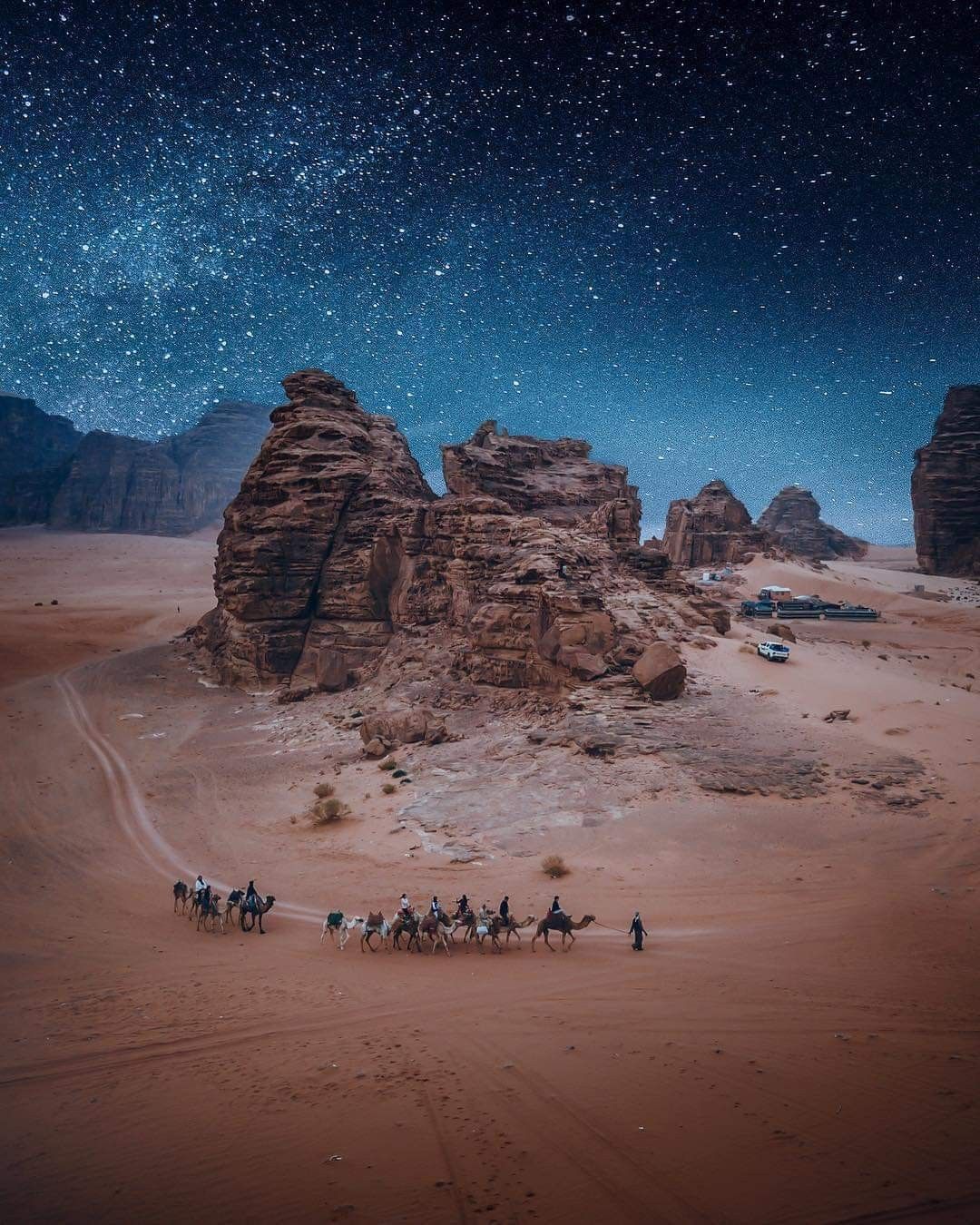
- Sunset and sunrise transform the desert—shadows lengthen across sands, rock faces ignite in crimson and purple, stars emerge in unpolluted skies with the Milky Way blazingly visible.
- Summer (June-August) brings extreme heat (40°C+ daytime), while winter (December-February) sees cold nights (near-freezing) but pleasant days.
- Spring (March-May) and autumn (September-November) offer optimal conditions.
- UNESCO World Heritage status (2011) recognizes both natural and cultural values—the desert landscape and the millennia of human inscription, trade routes, and living traditions.
Watch it
Who Visits
- Adventure travelers (40%), film location enthusiasts (20%), cultural tourists (25%), climbers/hikers (15%).
- Demographics 25-55 predominantly, with strong European (German, French, British), American, Asian, and domestic Jordanian tourism.
- Annual visitors approximately 150,000 (small compared to Petra), concentrated March-May and September-November.
- Overnight stays common—the desert's magic fully reveals during sunset-to-sunrise periods.
How to Get There
- Moderate.
- From Amman (capital), drive south 300km on Desert Highway (4 hours, excellent road) to Wadi Rum village, then enter protected area at Visitor Center (entry fee 5 JD/$7).
- Alternatively, bus from Amman to Aqaba (4 hours, 8 JD/$11), then shared taxi to Wadi Rum village (1 hour, 5-10 JD).
- Most visitors book all-inclusive tours with Bedouin camps—they arrange Aqaba/Amman pickup, jeep tours, meals, overnight camps ($60-200 per person/day depending on accommodation level).
- Private vehicles cannot freely explore—Bedouin guides with 4WD vehicles required for protected area access (preserves both environment and Bedouin livelihoods).
- No mobile coverage deep in desert (coverage in Wadi Rum village only).
- No medical facilities in desert—bring comprehensive first aid; serious cases evacuate to Aqaba (1 hour).
- English increasingly common among Bedouin guides, though Arabic primary language.
- Jordan is politically stable, safe for tourism—among Middle East's most visitor-friendly countries.
Best Time to Visit
- Adventure travelers, photographers (essential landscape destination), cultural enthusiasts, climbers, film lovers, couples seeking romance, solo travelers joining group tours, travelers comfortable with basic amenities.
- Best for active individuals appreciating outdoor experiences—less suitable for luxury travelers unwilling to accept desert camping conditions or elderly requiring significant comfort/accessibility.
Risk & Safety
- MODERATE.
- Weather extremes present primary risks: summer heat (40-48°C June-August) causes heat stroke, dehydration—minimum 4 liters water daily, avoid midday exposure.
- Winter cold (nighttime temperatures 0-5°C December-February) risks hypothermia—adequate bedding essential.
- Sandstorms—rare but possible, reducing visibility to meters.
- Getting lost—desert navigation difficult for inexperienced; always use Bedouin guides.
- Flash floods—though rare (desert receives minimal rain), sudden storms can send dangerous water through wadis; heed guide warnings.
- Venomous creatures—scorpions, vipers present but encounters rare; shake out shoes/bedding.
- Rock scrambling injuries—falls possible on exposed climbs; appropriate skill assessment critical.
- Dehydration—underestimated how quickly desert air depletes body water; constant hydration vital.
- Generally appropriate for families with teens comfortable camping and heat; not recommended for young children (extreme conditions, basic facilities, safety concerns) or elderly with mobility limitations (requires scrambling, 4WD riding over rough terrain, basic camp conditions).
- Reputable Bedouin camps maintain good safety standards—choose established operators.
- Political stability—Jordan is safe despite regional tensions; southern desert far from any conflict zones.
Pictures (7)
Unique Experiences
- 4WD Desert Safari Exploration: The classic Wadi Rum experience involves 3-6 hour 4WD tours ($40-80, included in camp packages) through the Protected Area's highlights. Lawrence's Spring: Natural rock pool at cliff base where T.E. Lawrence supposedly bathed during Arab Revolt—climb to water source for panoramic desert views. Khazali Canyon: Walk into narrow slot canyon (500m deep) viewing 4,000-year-old Thamudic petroglyphs and Nabatean inscriptions depicting humans, animals, footprints. Red Sand Dunes: Climb 100-meter tall dunes (20-30 minute ascent) for sunset—the fine sand makes climbing exhausting but running/rolling down is exhilarating. Burdah Rock Bridge: Natural arch requiring 2-hour scramble (moderate climbing, ropes provided) rewarding with views through the stone opening. Um Fruth Rock Bridge: Lower, more accessible arch (10-minute walk) perfect for sunset silhouette photos. The 4WD trucks—modified Toyota pickups with seats in back—handle the terrain expertly, drifting through sand, bouncing over rocks. Bedouin drivers possess intimate desert knowledge passed through generations.
- Overnight Bedouin Camp Under Stars: Stay in traditional goat-hair tents (authentic, basic) or modern camps offering private bubble tents with transparent roofs for stargazing from beds. Evening begins with zarb dinner—Bedouin feast where chicken, lamb, vegetables, and rice cook for hours in underground sand oven, emerging tender and smoky. Sit around campfire drinking sweet mint tea while Bedouin play traditional oud (stringed instrument) and share desert stories. The night sky is revelation—zero light pollution reveals thousands of stars, Milky Way spanning horizon to horizon, planets visibly bright, occasional shooting stars. Many camps provide telescopes or simply encourage laying on desert floor gazing upward. The silence is profound—no mechanical sounds, only wind and distant animal calls. Morning brings dawn awakening—watch sunrise ignite rock formations from your tent entrance. The temperature extremes (35°C+ day, 10°C or below night in cool seasons) necessitate proper bedding—camps provide thick blankets or sleeping bags.
- Camel Trekking Traditional Travel: While 4WD tours cover more ground, camel treks ($40-80 for 2-4 hours, $150-250 for multi-day expeditions) offer authentic Bedouin travel method used for millennia. The swaying gait takes adjustment; the height (2+ meters eye level when seated) provides elevated perspective; the slow pace (5-6 km/hour) allows absorbing landscape details. Short treks visit nearby sites; multi-day expeditions venture deep into desert with overnight camps at remote locations. Camels' calm temperament (when treated well) and ability to traverse soft sand where vehicles struggle make them ideal desert transport. The connection to historical trade routes and Bedouin culture adds depth beyond tourist activity. Some camps offer sunrise or sunset camel treks—silhouettes against colored skies create iconic photos.
- Rock Climbing and Scrambling Adventures: Wadi Rum hosts world-class rock climbing—towering sandstone walls with established routes ranging moderate to extreme difficulty. Jebel Rum (1,754m) requires technical climbing (guide essential, $200-300 per person for 1-2 days) with multi-pitch routes up 400-meter faces—summit views extend to Aqaba's Red Sea. Less extreme Burdah Rock Bridge scramble (described above) requires fitness and comfort with exposure but no technical skills—ropes provided for safety. Climbing season optimal October-April (summer heat makes rock dangerously hot). Several Bedouin guides are accomplished climbers offering both guided climbs and equipment rental. Not for beginners—serious routes require experience; guides assess capabilities honestly.
- Film Location Pilgrimage: Movie enthusiasts follow locations from famous films. "Lawrence of Arabia" (1962) shot extensively here—Lawrence's house (stone structure in desert), battle scenes locations. "The Martian" (2015) used Wadi Rum as Mars—Bedouin guides know exact filming locations including the "Mars habitat." "Dune" (2021) recently filmed scenes here. Some tours specialize in film location visits ($60-100). The landscape's otherworldly appearance makes it unsurprising filmmakers repeatedly choose it for alien planets. For film buffs, standing where iconic scenes occurred adds another layer to the experience.