Yemen
Socotra Island
- Rising from the Arabian Sea 350km south of Yemen's mainland, Socotra Island is Earth's most alien landscape—a 3,625 square kilometer biodiversity hotspot where 37% of plants, 90% of reptiles, and 95% of snails exist nowhere else on Earth.
- Geologically separated from Africa 20 million years ago, the island evolved in isolation, creating endemic species found on no other planet location.
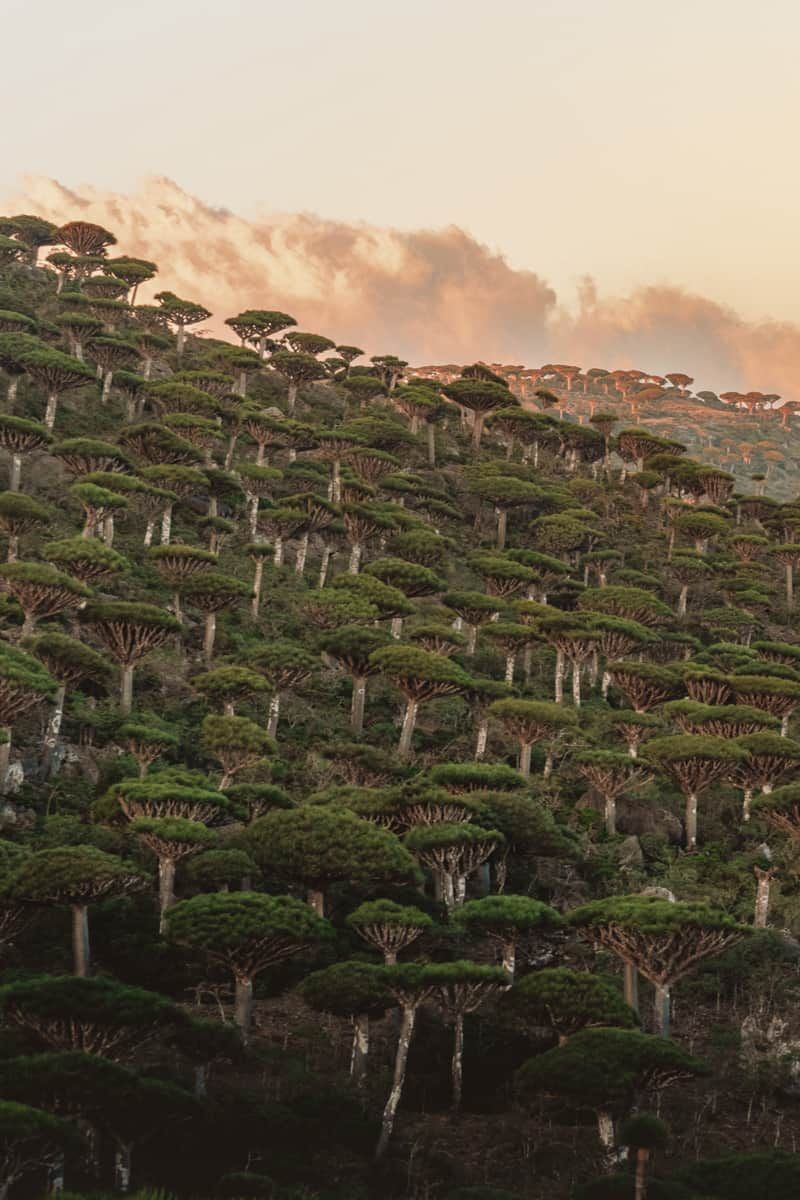
- The iconic Dragon's Blood Tree (Dracaena cinnabari) resembles upturned umbrellas—mushroom-shaped canopies provide shade while channeling rare moisture to roots; when cut, they "bleed" crimson resin used for millennia as medicine, dye, and varnish.
- Over 700 species of these trees dot the Homhil Plateau and Dixsam Plateau, creating prehistoric forests.
- The Desert Rose (Adenium obesum socotranum) swells into grotesque bottle-shaped trunks storing water, blooming pink against limestone.
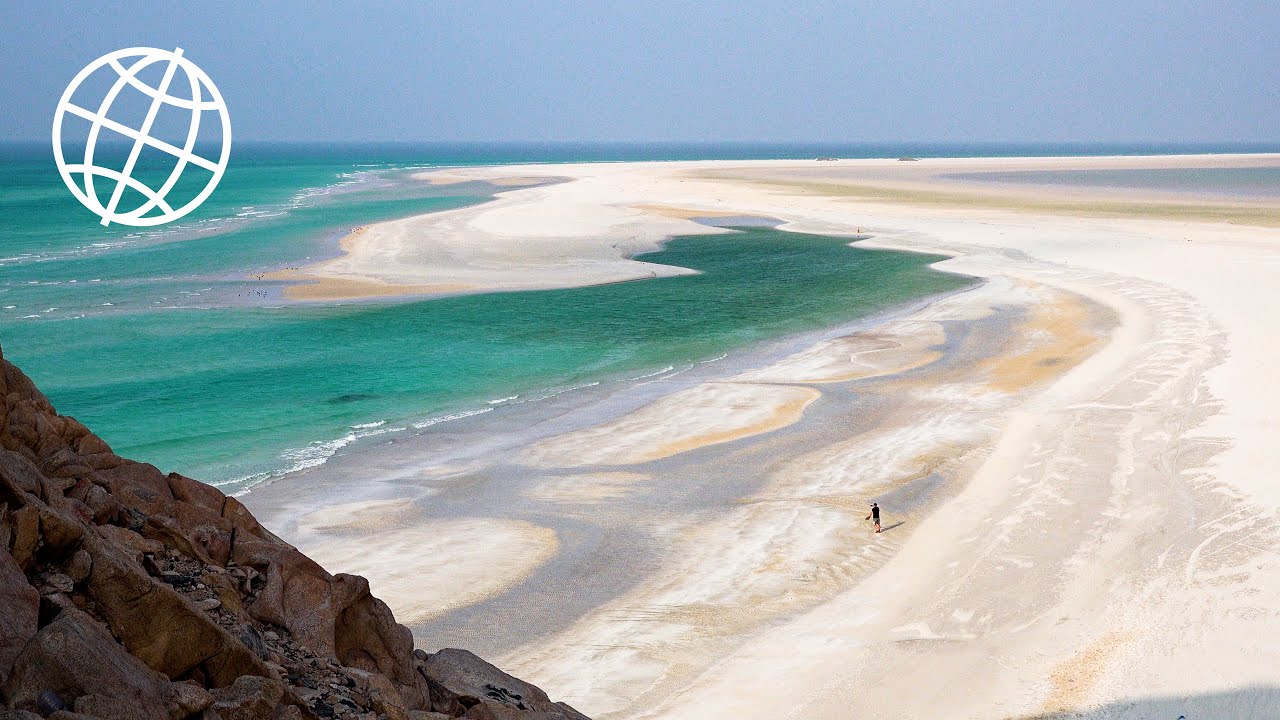
- Socotra's landscapes vary dramatically: the Hajhir Mountains reach 1,525 meters with mist-shrouded peaks, sand dunes sweep 40km along northern coasts, limestone caves (Hoq Cave extends 3km with stalagmites and stalactites) hide ancient inscriptions, and turquoise lagoons (Detwah Lagoon, Qalansiyah) rival Maldivian perfection.
- Bedouin pastoralists (40,000 population) maintain traditions unchanged for centuries—living in stone houses or caves, speaking Soqotri language (pre-Arabic), herding goats through frankincense groves.
- The island remained largely closed to tourists until 1999; even now, only 5,000-6,000 visitors arrive annually.
- Political instability in Yemen mainland has paradoxically preserved Socotra from overdevelopment.
- UNESCO World Heritage status (2008) recognizes its irreplaceable natural heritage.
- Recent years brought UAE developmental pressure (airport expansion, road construction) threatening delicate ecosystems.
Watch it

Who Visits
- Botanists/biologists (30%), extreme adventure travelers (30%), nature photographers (25%), cultural anthropologists (15%).
- Demographics skew 30-60 years, predominantly male (65%), experienced travelers who've exhausted conventional destinations.
- Strong representation from French, Germans, Italians, Russians, and Middle Eastern nature enthusiasts.
- Minimal tourist infrastructure means only dedicated travelers attempt visits.
How to Get There
- DIFFICULT.
- Access requires navigating Yemen's complex security situation.
- Currently (2025), most visitors fly from Abu Dhabi (UAE) to Socotra on chartered flights organized by specialized tour operators—independent travel nearly impossible.
- Commercial flights suspended since 2020 due to Yemen conflict.
- Tour packages ($2,500-5,000 for 7-10 days) include flights, permits, ground transportation, guides, camping equipment, and meals.
- From Hadibo (main town, 8,000 population), 4WD vehicles access sites via rough tracks—no paved roads beyond town.
- The island has no functioning ATMs (cash only), sporadic electricity, limited mobile coverage, no medical facilities beyond basic clinic.
- Weather constraints significant: May-September brings monsoon winds making sea travel dangerous; optimal season October-April.
- Visitors require Yemen visa (obtained through tour operator), though Socotra maintained relative autonomy and safety despite mainland conflict.
- Vaccination for Hepatitis A, Typhoid recommended.
- Travel insurance essential, with explicit Yemen coverage—most standard policies exclude war zones.
Best Time to Visit
- Experienced adventure travelers, biologists/ecologists, serious photographers, travelers seeking extreme off-grid experiences, fit adults 25-65.
- NOT for families with children (no facilities, rough conditions, long travel days, heat), elderly (physical demands), luxury travelers (accommodations basic—camping or simple guesthouses), or anyone requiring medical security.
Risk & Safety
- HIGH.
- This is among Earth's most challenging accessible destinations.
- Risks include: Political instability—though Socotra remained relatively peaceful, Yemen's ongoing conflict creates unpredictable situations; evacuation could become necessary with limited options.
- Medical emergencies—no advanced medical care; evacuation to UAE or Oman requires coordination (several reported cases annually).
- Environmental hazards—extreme heat causes dehydration/heat stroke; rough terrain leads to injuries; marine life includes venomous species.
- Infrastructure lacks—no reliable communication, electricity, banking.
- Only for experienced travelers comfortable with uncertainty and primitive conditions.
- Absolutely unsuitable for: families with children, seniors with health issues, first-time adventure travelers, anyone with medical conditions requiring monitoring/medication.
- Travel insurance critical, along with comprehensive preparation and reputable tour operator (recommended: Socotra Eco-Tours, Socotra Specialist).
Pictures (7)
Unique Experiences
- Dragon's Blood Forest Immersion (Dixsam Plateau): Four-hour 4WD journey (60km from Hadibo, 2 hours) reaches 900m-elevation plateau where hundreds of dragon's blood trees create surreal forests. Early morning visits (6-8am) capture mist swirling through branches, creating ethereal atmosphere. Guides explain resin harvesting—locals score bark, collect hardened resin droplets used in traditional medicine and cosmetics. The silence is profound; only wind through branches and distant goat bells break it. Sunset transforms trees into dark silhouettes against technicolor skies. Photography opportunities unmatched—brings every camera setting into play. The feeling is genuinely walking among alien flora; your brain struggles to accept these trees exist on Earth.
- Detwah Lagoon Beach Paradise: On northwestern coast, this protected lagoon showcases blindingly white sand dunes meeting waters cycling through turquoise, emerald, and sapphire depending on depth. The lagoon stretches 5km, shallow enough (1-2m deep) for safe swimming and snorkeling. Coral reefs house endemic fish species—Socotra's waters contain 253 reef-building coral species and 730 fish species, many found nowhere else. Bedouin families camp on beaches; share meals of freshly caught kingfish grilled over driftwood, flatbread, and strong coffee spiced with cardamom. October-March offers optimal conditions; summer brings intense heat (40°C+) and wind.
- Hoq Cave Ancient Inscriptions Expedition: This limestone cave in Hajhir Mountains requires 1-2 hour hike (moderate difficulty, scrambling on loose rock) to reach 180m-high entrance. Inside, the cave system extends 3km with chambers reaching 50m height. Ancient inscriptions in South Arabian script, Indian Brahmi, Ethiopian Ge'ez, and Greek date from 1st century BCE-5th century CE—evidence of Socotra's role as maritime trade hub on incense route. Stalactites, stalagmites, and flowstone formations create cathedral-like spaces. Bring strong headlamps (cave lighting non-existent) and wear sturdy shoes—floors slippery with guano. The cave maintains cool 20°C temperature, providing respite from external heat. Hire local guides (included in tours)—cave navigation requires experience.
- Traditional Bedouin Village Homestay: Several tour operators arrange overnight stays in Homhil or mountain villages where families welcome guests into stone homes. Participate in daily life—milking goats at dawn, harvesting dates, preparing khubs (flatbread) in outdoor clay ovens. Evening meals feature goat meat cooked in traditional methods, samna (clarified butter), honey from Socotra's endemic bees. Language barriers exist (Arabic and Soqotri spoken; minimal English) but hospitality transcends words. Women demonstrate frankincense resin burning—Socotra produces superior boswellia serrata. The experience provides rare window into lifestyles disappeared elsewhere in globalized world.
- Tent Camping Under Unpolluted Skies: Zero light pollution combined with clear air and desert conditions create optimal stargazing. Guides establish camps near Dragon's Blood forests or beaches. Milky Way appears as bright river of light; satellites visibly traverse; meteor showers (Perseids in August, Geminids in December) produce 60-100 meteors hourly. The silence and darkness are profound—many visitors report emotional responses to the cosmic display, feeling simultaneously insignificant and connected to the universe.