Bolivia
Salar de Uyuni
- At 3,656 meters above sea level, Salar de Uyuni is the world's largest salt flat—an otherworldly 10,582 square kilometer expanse of hexagonal salt patterns stretching to every horizon.
- Located in southwest Bolivia's Potosí and Oruro departments, this prehistoric lakebed (formed 40,000 years ago when Lago Minchin evaporated) contains 10 billion tons of salt and holds 50-70% of the world's lithium reserves beneath its crystalline surface.
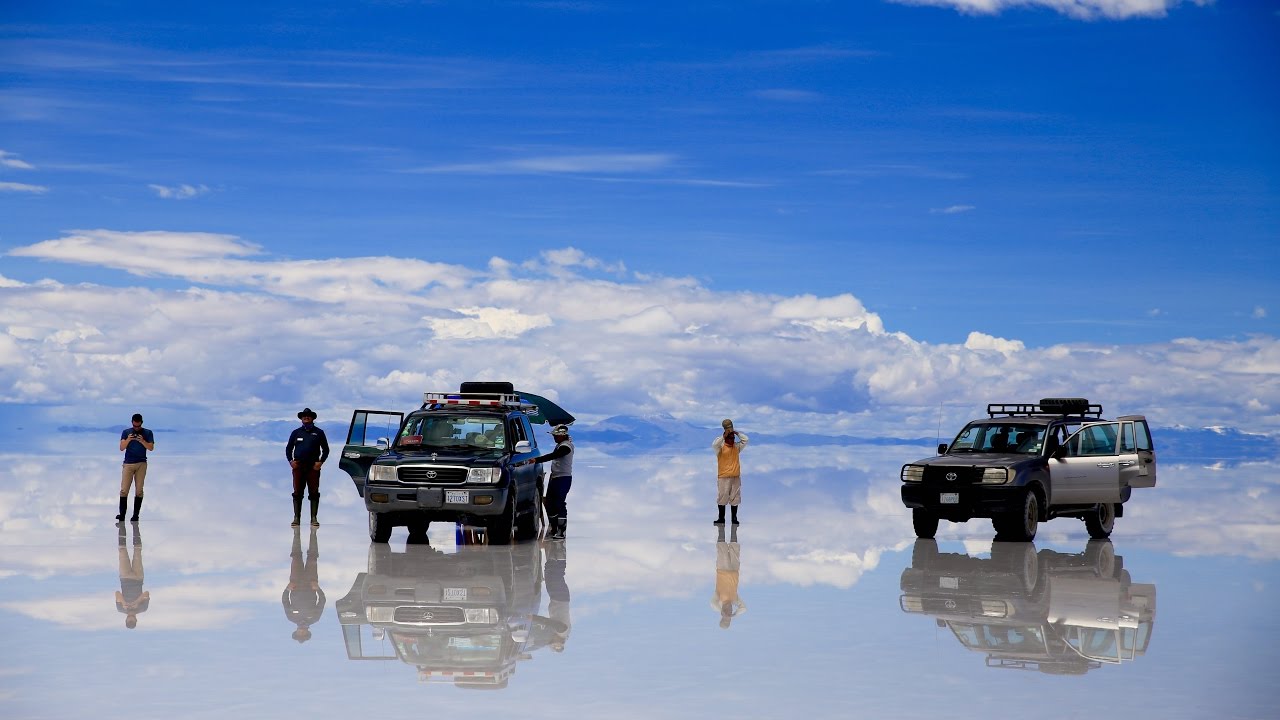
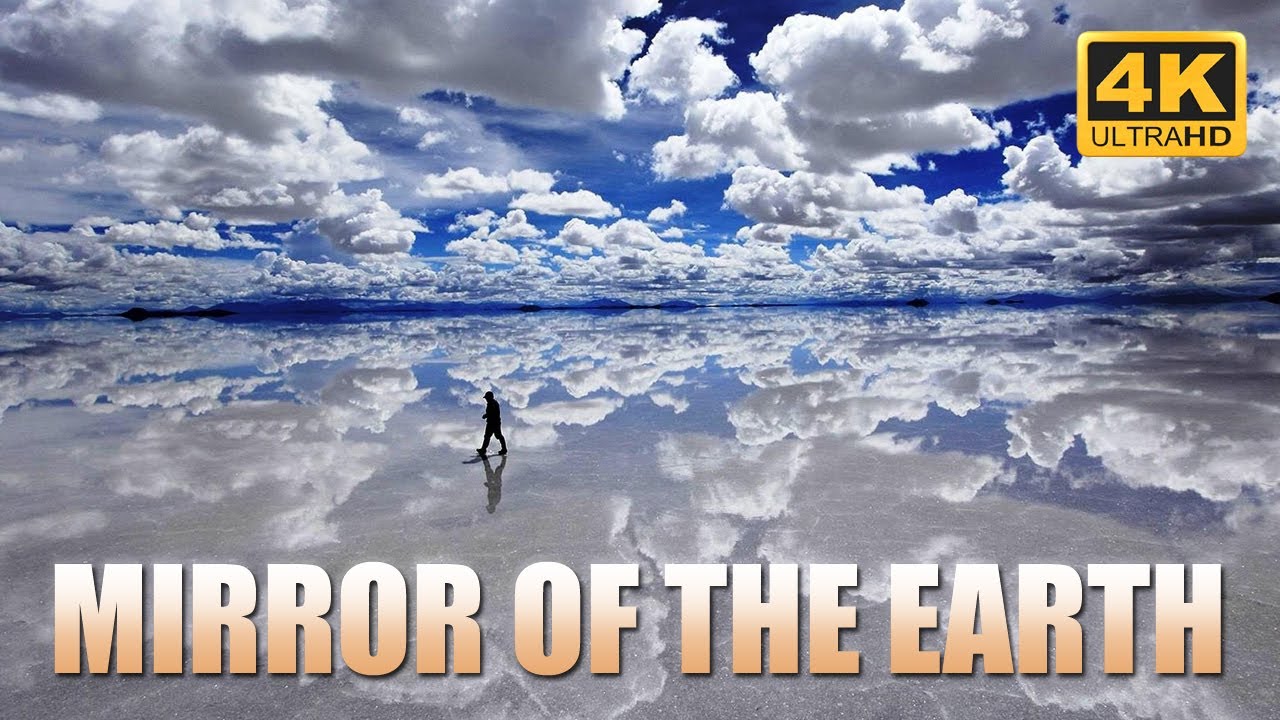
- During the rainy season (December-April), a thin layer of water transforms the flats into the world's largest natural mirror, creating surreal reflections where sky and earth become indistinguishable—clouds appear to float beneath your feet, and the horizon vanishes entirely.
- The salt crust, 10 meters thick in places, rests atop a brine lake.
- Scattered across this blinding white wilderness are "islands"—ancient coral reef remnants now topped with giant cacti (Echinopsis atacamensis) reaching 12 meters tall and living over 1,200 years.
- The dry season (May-November) reveals geometric salt patterns formed by evaporation, resembling infinite honeycomb tiles.
- The Palacio de Sal (Salt Palace Hotel) and train cemetery near Uyuni town add haunting human elements—rusted locomotives from the 1940s mining boom create post-apocalyptic sculptures.
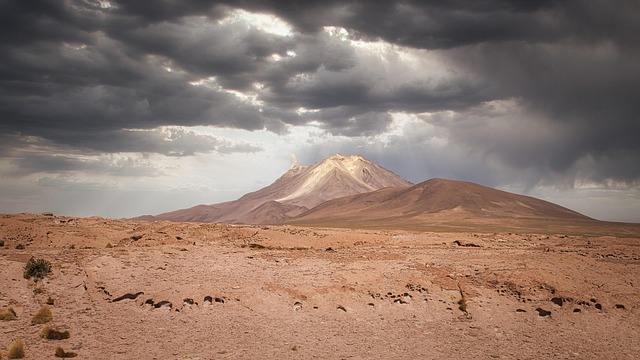
- Flamingos feed in colored lagoons (Laguna Colorada's red waters, Laguna Verde's emerald hues) at the edges, while volcanoes exceeding 5,000 meters frame the landscape.
- Night skies, unpolluted and at high altitude, reveal the Milky Way with extraordinary clarity—astrophotographers rate it among Earth's top five stargazing locations.
Watch it
Who Visits
- Photographers (35%), adventure travelers (30%), geology/nature enthusiasts (20%), spiritual seekers (15%).
- Age range 20-55 predominantly.
- Strong representation from European backpackers, Japanese tour groups, American photographers, and South American domestic tourists.
- Peak season July-August (dry season optimal for hexagonal patterns) and January-March (mirror effect).
- Annual visitors: approximately 300,000.
How to Get There
- Moderate difficulty.
- Fly to La Paz (3,640m—acclimatize 2-3 days for altitude), then overnight bus to Uyuni town (10-12 hours, $15-30) or fly to Uyuni Airport (1 hour, $80-150).
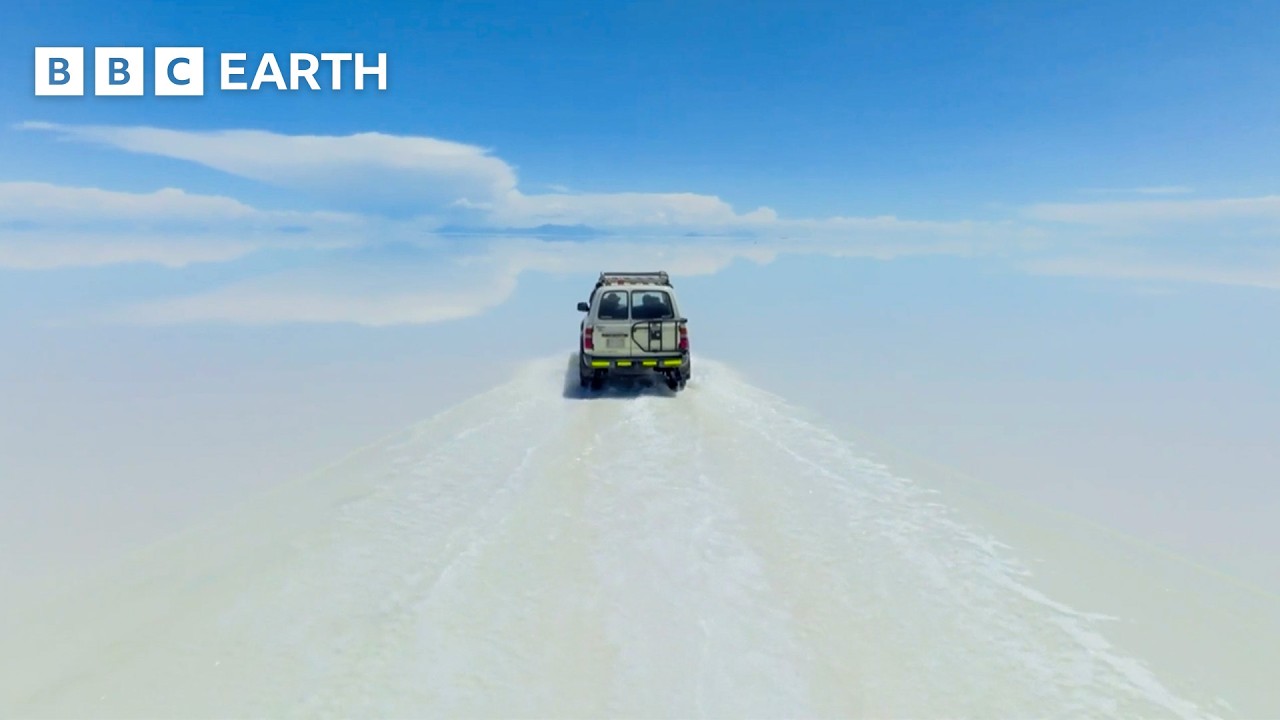
- From Uyuni, all tours require 4WD vehicles—no public transportation crosses the salt flats.
- Tours range 1-day to 4-day expeditions ($50-250).
- Roads are nonexistent; drivers navigate by GPS and experience across featureless terrain.
- Altitude sickness affects 40% of visitors—symptoms include headaches, nausea, breathlessness.
- Temperatures extreme: daytime 20-25°C, nighttime -15°C to -25°C (especially June-August).
- Basic accommodations available in Uyuni; salt hotels on the flats provide mid-range comfort.
- Medical facilities limited—serious cases require evacuation to La Paz.
- Mobile coverage only in Uyuni town.
Best Time to Visit
- Adventurous couples, photography enthusiasts (essential destination), backpackers, small group tours (4-6 ideal for vehicle), families with teenagers.
- Not ideal for young children due to altitude, basic facilities, long drives.
- Excellent for solo travelers joining group tours.
Risk & Safety
- MODERATE-HIGH.
- Altitude sickness is primary concern—20% of visitors experience severe symptoms requiring descent.
- Temperatures can cause hypothermia (nights) or dehydration/sunstroke (days).
- The intense UV radiation at high altitude causes severe sunburn in 30 minutes without protection.
- White salt creates snow-blindness without quality sunglasses.
- Multi-day tours require physical resilience—basic accommodations, limited hygiene facilities, long drives (8+ hours daily) on rough non-roads.
- NOT RECOMMENDED for: pregnant women, those with heart/respiratory conditions, children under 8, seniors with mobility issues.
- Flash floods during rainy season can strand vehicles.
- Choose reputable tour operators—budget companies have safety issues (poorly maintained vehicles, inexperienced drivers, inadequate emergency protocols).
Pictures (8)
Unique Experiences
- Mirror Effect Photography Sessions: During rainy season (peak January-February), when 1-20cm of water covers sections, photographers create impossible perspective shots—people appearing to walk on clouds, vehicles floating in sky reflections, 360-degree panoramas where heaven and earth merge. Professional photographers employ techniques like forced perspective (people appearing to stand in giant hands, jump into bottles). The best mirror conditions require scouting specific areas daily as water distribution changes. Sunrise (6am) and sunset (6pm) provide optimal lighting—golden hour reflections create double sunrises/sunsets.
- Incahuasi Island Cactus Forest: This island (also called Fish Island for its shape) rises 40 meters above the salt plain, hosting thousands of ancient trichorereus cacti. A 1.5km hiking trail circles the island (30-45 minutes), providing 360-degree salt flat views. The cacti grow only 1cm annually, making 10-meter specimens over 1,000 years old. Their presence proves this was once submerged—they're adapted survivors. Viscachas (rabbit-like rodents) live among the cacti. Entry fee $3. Midday visit optimal for photography.
- Colchani Salt Processing Village: At the flats' edge, this community of 600 extracts and processes salt using pre-Columbian techniques. Watch workers rake salt into conical mounds for drying, then grind and iodize it. Visit cooperatives where artisans create salt sculptures, hotels, and furniture. The salt restaurant serves quinoa dishes on salt tables using salt plates—novelty but authentic. Purchase artisan salt blocks ($1-5). Museo de Sal explains geological formation and indigenous history ($2 entry).
- Eduardo Avaroa Reserve Multi-Day Expeditions: The classic 3-day/2-night tour ($180-250) extends beyond Uyuni to Laguna Colorada (red from algae, home to 30,000 James's flamingos), Laguna Verde (turquoise waters beside Licancabur volcano), geysers erupting sulfurous steam at dawn, and rock formations like "Árbol de Piedra" (Stone Tree) sculpted by wind. Nights in basic refugios (dormitory huts, no heating, shared bathrooms) test endurance but reward with isolation. Stargazing at 4,500+ meters reveals celestial phenomena impossible to see at lower elevations.
- Train Cemetery (Cementerio de Trenes): Three kilometers from Uyuni, dozens of steam locomotives and cars from Bolivia's 1940s mining heyday rust into abstract sculptures. British-built engines that once transported minerals to Pacific ports now provide climbing opportunities and post-apocalyptic backdrops. Sunset light transforms rust into copper and gold. Free access, no guides necessary. Represents Bolivia's economic history and extractive industries' rise and fall.