Turkey
Pamukkale Thermal Pools
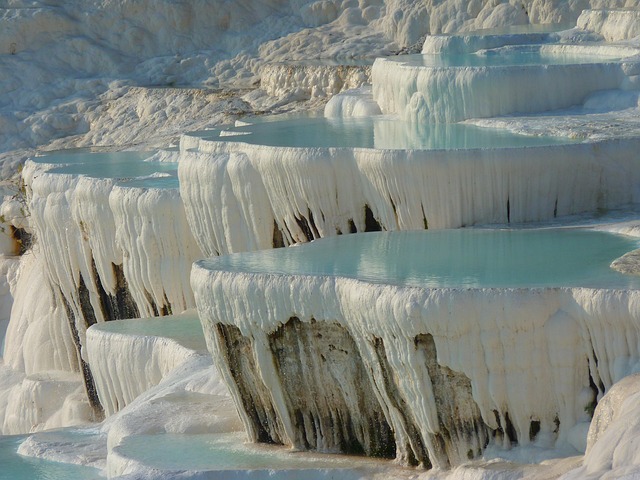
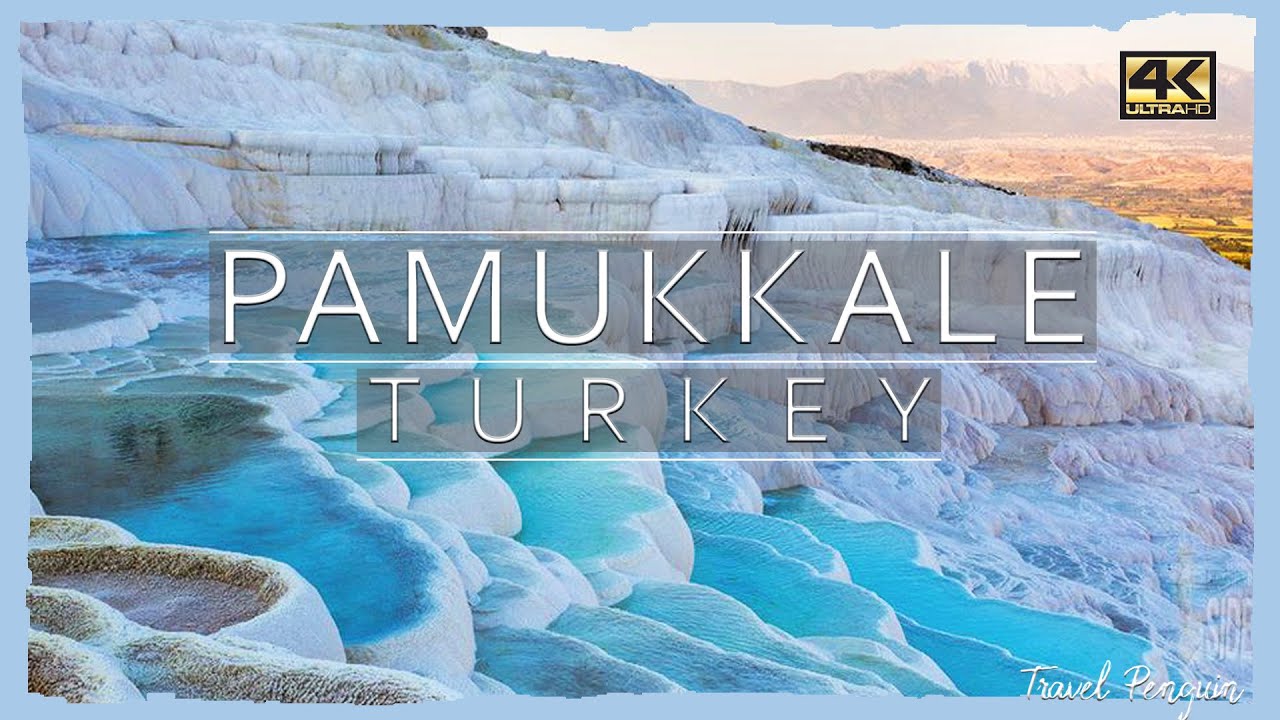
- In southwestern Turkey's Denizli Province, Pamukkale ("Cotton Castle") presents a surreal landscape where mineral-rich thermal waters cascade over travertine terraces, creating blindingly white calcium carbonate formations resembling frozen waterfalls or cotton fields.
- The process occurs over millennia: water from 17 hot springs (temperature 35°C, heavily saturated with calcium bicarbonate) flows over cliff edges, deposits calcium carbonate that hardens into travertine, and gradually builds the terraces—each pool edged by delicate white rims filled with shallow turquoise water.
- The formation stretches 2,700 meters long and 160 meters high, visible for kilometers across the Çürüksu valley.
- Ancient Hierapolis city crowns the plateau above—a Greco-Roman spa town (founded 190 BCE) where wealthy Romans traveled to bathe in therapeutic waters believed to cure ailments.
- Extensive ruins survive: a 12,000-seat theater with intact stage building, necropolis containing 1,200+ tombs (one of Anatolia's largest), Temple of Apollo built over Plutonium (cave emitting toxic gases ancient priests used for prophecy), and the Antique Pool where submerged Roman columns create unique swimming experience among ruins.
- UNESCO World Heritage status (1988) protects both natural and archaeological elements.
- The site faced environmental damage from hotels built atop terraces in 1960s-80s (water diverted, terraces graying from pollution, foot traffic erosion), leading to controversial closure and rehabilitation (1990s).
- Now strictly managed: shoes removed for terrace walking (protecting delicate surfaces), water flow carefully controlled to restore whiteness, and hotels demolished.
- The result—brilliantly white terraces dramatically restored though some argue over-management reduced authenticity.
- Sunset transforms terraces into pink-gold cascades; winter sometimes brings snow creating white-on-white landscape.
- The combination of natural wonder and classical archaeology creates unique dual attraction.
Watch it

Who Visits
- Tourists on Turkey circuit (50%), spa/wellness seekers (25%), archaeology enthusiasts (15%), photographers (10%).
- Demographics extremely broad—all ages, families with young children common.
- Strong Turkish domestic tourism, plus European (especially German, Russian, British), Asian, and American visitors.
- Annual visitors 2.5+ million, concentrated April-October.
- Peak summer (July-August) brings crowds (10,000+ daily) and intense heat (35-40°C); shoulder seasons (April-May, September-October) optimal; winter (December-February) sees minimal crowds, cold water, but dramatic snow-dusted white terraces.
How to Get There
- Easy.
- Fly to Denizli Çardak Airport (65km, 1 hour drive, $10-15 shuttle/taxi) from Istanbul or İzmir.
- Alternatively, bus from İzmir (3 hours, $8-12) or overnight from Istanbul (10 hours, $20-30).
- Pamukkale village offers full tourist infrastructure—hotels ($25-150/night, many with thermal pools), restaurants, tour agencies.
- The site has two entrances: lower gate (north, direct access to terraces) and upper gate (south, Hierapolis ruins entrance, then descend to terraces).
- Entry fee ₺700 ($24, includes both Pamukkale terraces and Hierapolis ruins, valid one day).
- The site is largely accessible—flat walking in Hierapolis, gentle slope on terraces—though uneven travertine surfaces challenge mobility-impaired visitors.
- Wear swimsuit under clothes if planning to wade terraces.
- Mobile coverage excellent.
- Medical clinic in Pamukkale village; hospital in Denizli.
- English widely spoken.
- Accessible year-round.
Best Time to Visit
- All ages including families with toddlers (safe, engaging for children, manageable walking), elderly and limited mobility (mostly flat, though travertine uneven), photographers, spa/wellness travelers, archaeology enthusiasts, Turkish culture seekers.
- One of Turkey's most accessible major attractions—excellent for first-time international travelers.
Risk & Safety
- LOW.
- Very safe, well-managed site.
- Risks: Slips on wet travertine—the smooth, mineral-coated surfaces become slippery when wet; walk carefully to avoid falls (usually minor injuries—bruises, scrapes).
- Sun exposure—white terraces reflect UV intensely; sunburn occurs rapidly without protection; sunscreen, hat, sunglasses essential.
- Hot water temperature—while comfortable (35°C), prolonged immersion can cause dizziness; stay hydrated.
- Uneven surfaces—the calcium formations create rough, irregular walking surfaces potentially uncomfortable for tender feet and challenging for mobility-impaired visitors.
- Antique Pool depth—5 meters requires swimming ability; lifeguards present but monitor children closely.
- Crowds—peak summer throngs can create congestion on terraces; early/late visits avoid.
- Perfect for families with young children—warm water shallow, walking engaging, ruins to explore.
- Generally accessible for seniors and mobility-limited—some areas require assistance on uneven surfaces but site largely manageable.
- Not wheelchair accessible on terraces due to travertine texture, though Hierapolis plateau has paved paths allowing partial access.
Pictures (5)
Unique Experiences
- Barefoot Terrace Walking at Sunrise: Enter via lower gate when site opens (6:30am April-October, 8am November-March) to experience terraces before crowds. Remove shoes (required—stored at entrance or carry in bag) and ascend the 200-meter slope through shallow thermal pools, calcium formations crunching underfoot (walk carefully to minimize damage). The warm water (35°C) soothes feet; the surreal landscape—pure white travertine, turquoise pools, steam rising in cool morning air—creates otherworldly atmosphere. Sunrise (6:30-7:30am spring/summer) casts soft light and pinks across terraces. The pools range 1-20cm deep, some dry depending on water flow management. Photograph from multiple levels—looking up reveals cascading pools and other barefoot visitors creating scale; looking down shows Pamukkale village and valley. The walk takes 30-45 minutes to top; most tourists arrive 10am+ allowing morning solitude. Note: Only specific terraces have water flow (controlled rotation to prevent damage); some pools may be dry.
- Antique Pool Swimming Among Roman Columns: At Hierapolis site, the Cleopatra Antique Pool (₺350/$12 additional fee) offers unique swimming experience—a thermal pool (36°C, 5 meters deep) where an earthquake toppled ancient columns that now lie submerged, creating surreal underwater ruins to swim among. The slightly carbonated, mineral-rich water supposedly provides therapeutic benefits (high calcium, magnesium, sulfur content). The pool bar serves drinks to enjoy while floating in warm water with ruins backdrop. The pool attracts families and couples—bathing suits required, changing facilities provided. The kitsch factor is high (modern pool over ancient site), yet the experience remains memorable—where else can you swim around 2,000-year-old columns? Visit afternoon when terrace walking becomes too hot.
- Hierapolis Archaeological Exploration: The extensive ruins deserve 2-3 hours. Theater: Remarkably preserved 12,000-seat structure with intact stage building featuring elaborate reliefs—climb to upper tiers for terrace and valley views. Necropolis: Walk among over 1,200 tombs (sarcophagi, house-tombs, tumuli) lining 2km ancient road—the variety of funerary architecture reflects diverse cultures (Jewish, early Christian, pagan). Temple of Apollo and Plutonium: The cave (closed for safety—toxic gas still emits) was the ancient oracle site where priests apparently survived deadly gases (modern science suggests they positioned themselves at safe heights above the heavy gas layer). Martyrium of St. Philip: Octagonal 5th-century church atop hill commemorates apostle Philip's martyrdom—requires steep climb but rewards with panoramas. Hire local guide (₺400-600/$14-20) for historical context enriching the ruins beyond self-exploration.
- Traditional Turkish Bath (Hamam) in Village: After walking white terraces, enhance the thermal experience with authentic Turkish hamam in Pamukkale village. Traditional baths (₺200-400/$7-14) include warm room relaxation, steam bath, soap massage on heated marble slab, and cold water rinse—the full Ottoman bathing ritual. Some facilities use natural thermal water directly from source. The vigorous scrubbing removes dead skin (slightly painful but invigorating); the massage relaxes muscles strained from terrace walking. The experience connects contemporary practice to ancient Hierapolis' bathing culture. Many hotels include private thermal pools fed by hot springs—soaking evening under stars provides relaxation after full site days.
- Paragliding Over White Terraces: Adrenaline seekers can book tandem paragliding flights ($60-90, 15-20 minutes) launching from nearby Çökelez Mountain. The aerial perspective reveals the full travertine formation cascading down the plateau edge—the white contrasts starkly with green valley below. Flights also overfly Hierapolis ruins and surrounding countryside. Morning flights (8-10am) offer better conditions and lighting. Requires good weather; operators cancel if winds excessive. Not for acrophobes—height 500-700 meters above ground; landings in valley fields occasionally rough.