United Kingdom
Falkland Islands
© Photo by Paul Carroll on Unsplash
- The Falkland Islands, a remote archipelago in the South Atlantic Ocean approximately 480 kilometers east of South America, represent one of the world's most pristine and untouched wilderness destinations. Comprising two main islands (East Falkland and West Falkland) and over 700 smaller islands, this British Overseas Territory spans 12,173 square kilometers yet hosts only around 3,500 permanent residents—creating a landscape where wildlife vastly outnumbers humans. The islands' isolation, harsh climate, and minimal human impact have preserved ecosystems found nowhere else on Earth.
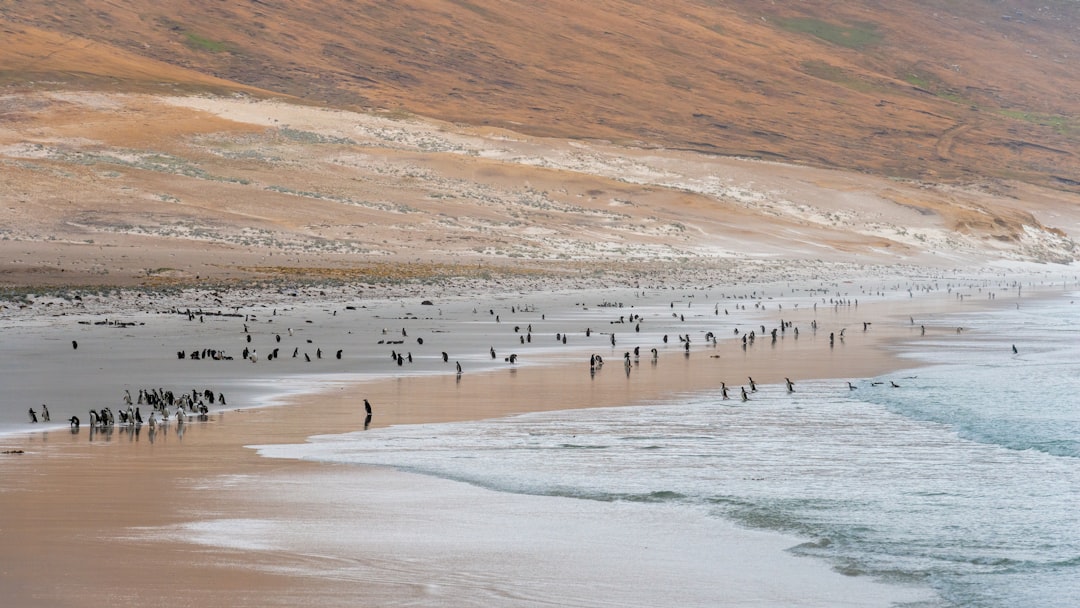
- What makes the Falkland Islands globally unique is their extraordinary wildlife diversity and accessibility. The islands host five species of penguins (king, gentoo, Magellanic, macaroni, and rockhopper), with colonies numbering in the hundreds of thousands. Elephant seals, sea lions, and fur seals populate the beaches. Over 200 bird species, including rare albatrosses, petrels, and the endemic Cobb's wren, thrive in the islands' tussock grass and coastal habitats. The Falklands are one of the few places where visitors can observe wildlife at extremely close range—penguins often approach within meters, unafraid of humans due to their isolation.
- The islands' history is equally compelling. Evidence of human habitation dates back 5,000 years, with indigenous peoples visiting seasonally. European discovery occurred in 1592, but permanent settlement didn't begin until the 19th century. The 1982 Falklands War between Argentina and the United Kingdom brought international attention, but today the islands are peaceful, self-governing, and economically stable through fishing licenses, tourism, and wool production. The capital, Stanley, with its colorful corrugated iron houses and British character, feels like stepping into a time capsule of 1950s Britain.
- The landscape is dramatic and varied—rolling hills covered in tussock grass, white sand beaches, dramatic cliffs, and peat bogs. The climate is sub-Antarctic: cool summers (average 13°C), cold winters (average 2°C), strong winds, and frequent rain. This challenging weather creates the islands' unique character and ensures that wildlife viewing is possible year-round, though summer (November-March) offers the best conditions and longest days.
Watch it

Who Visits
- Approximately 60,000-70,000 visitors annually, primarily arriving via cruise ships (85%) and a smaller number via flights from Chile or the UK.
- Demographics: Wildlife enthusiasts (40%), birdwatchers (25%), cruise passengers on day excursions (20%), photographers (10%), history buffs (5%).
- Age range: 45-75 (cruise passengers), 30-65 (independent travelers).
- Nationalities: British (40%), American (25%), European (20%), Australian/New Zealand (10%), other (5%).
- Physical requirements: Moderate fitness for most activities—walking on uneven terrain, some hiking.
- Many sites are accessible, but remote locations require good mobility.
- Peak season: October-March (austral spring/summer) when weather is mildest, wildlife is most active, and cruise ships visit regularly.
- Winter (June-August) sees very few visitors due to harsh weather, though it offers unique experiences for hardy travelers.
How to Get There
- Moderate difficulty, requiring advance planning.
- From the UK: Fly British Airways from London Heathrow via RAF Brize Norton (military flight, 18 hours, limited civilian seats, £1,800-2,500 round-trip).
- From South America: Fly LATAM Airlines from Santiago, Chile (weekly flights, 2.5 hours, $800-1,200 round-trip, most common route for tourists).
- From Stanley Airport, taxis or pre-arranged tours transport visitors to accommodations.
- Stanley has hotels, guesthouses, and self-catering options ($80-300/night).
- Independent travel requires booking accommodations and tours in advance—the islands have limited infrastructure.
- Most visitors join organized tours or cruise ship excursions.
- Car rental available but expensive ($80-120/day).
- Guided tours essential for wildlife viewing and remote locations ($150-400/day).
- English spoken universally.
- Currency: Falkland Islands Pound (pegged to British Pound).
- Credit cards accepted in Stanley, cash needed in remote areas.
- Medical facilities in Stanley, evacuation to Chile/UK for serious cases.
- Best booked 6-12 months in advance, especially for flights and accommodations.
Best Time to Visit
- Wildlife enthusiasts seeking close encounters with penguins, seals, and seabirds; birdwatchers interested in rare and endemic species; photographers capturing pristine landscapes and abundant wildlife; nature lovers wanting untouched wilderness experiences; history buffs interested in the 1982 conflict and British heritage; cruise passengers seeking unique day excursions; travelers seeking remote, off-the-beaten-path destinations.
- Not suitable for: Budget travelers (expensive destination), those seeking nightlife or entertainment, families with very young children (limited activities, challenging weather), travelers with mobility limitations (uneven terrain, remote locations), those requiring extensive medical facilities.
Risk & Safety
- LOW to MODERATE.
- Physical risks: Slippery surfaces on beaches and cliffs (penguin guano, wet rocks), falls on uneven terrain, exposure to harsh weather (hypothermia, wind chill), remote locations with limited emergency services.
- Environmental risks: Strong winds (can reach 100+ km/h), sudden weather changes, limited medical facilities (evacuation required for serious conditions), isolation (nearest major hospital in Chile, 2.5 hours by air).
- Health risks: Exposure-related illness from cold/wind, limited medical resources, potential for injuries in remote areas.
- Safety measures: Well-marked paths at major sites, experienced guides for remote locations, emergency protocols in place, generally safe destination with low crime.
- However, remoteness means help can be hours away.
- Not recommended for: Travelers with serious health conditions, those uncomfortable with isolation, individuals requiring immediate medical access.
Pictures (5)
Unique Experiences
- Penguin Colony Encounters (World-Class Wildlife Viewing): The Falklands host five penguin species in massive colonies accessible to visitors. At Volunteer Point (East Falkland), 1,200 king penguins—the second-largest species—nest just meters from viewing areas. Visitors can sit quietly and watch penguins go about their daily lives: feeding chicks, preening, swimming, and waddling. The penguins show no fear, allowing incredibly close observation and photography. Other sites include Saunders Island (rockhopper, gentoo, Magellanic penguins), Carcass Island (gentoo colonies), and Sea Lion Island (all five species). Each location offers different species combinations and behaviors. The experience of being surrounded by thousands of penguins, hearing their calls, and observing their social interactions is unforgettable. Best visited October-March when penguins are breeding and most active.
- Sea Lion Island Wildlife Reserve (Complete Ecosystem Experience): This small island (9 square kilometers) accessible by small plane or boat offers the most concentrated wildlife viewing in the Falklands. Elephant seals (up to 4,000 kg) haul out on beaches, sea lions patrol the coastlines, and five penguin species nest in close proximity. The island has a single eco-lodge, creating an intimate experience where wildlife viewing happens steps from accommodation. Guided walks reveal the island's complete ecosystem—from tussock grass habitats supporting endemic birds to coastal areas where marine mammals and seabirds coexist. The island's small size means visitors can explore the entire reserve, observing different species throughout the day. This is the Falklands' premier wildlife destination, offering the most comprehensive experience in the shortest time.
- Stanley Historic Walking Tour (British Heritage Time Capsule): The capital Stanley, with 2,500 residents, feels like a preserved British village from the 1950s. Colorful corrugated iron houses painted in bright blues, reds, and greens line the waterfront. Historic sites include the 1844 Christ Church Cathedral (southernmost Anglican cathedral), the Whalebone Arch made from blue whale jawbones, and the Falkland Islands Museum detailing the islands' history from discovery through the 1982 conflict. The town's British character is evident in pubs, tea rooms, and the Union Jack flying throughout. Walking tours reveal stories of early settlers, whaling history, and the 1982 war. The town's isolation has preserved traditions and architecture that have disappeared elsewhere. Visitors can experience authentic British culture in an extraordinary setting.
- Remote Island Expeditions (Ultimate Isolation Experience): Beyond the main islands, over 700 smaller islands offer true wilderness experiences. Accessible by small plane or boat, these remote locations provide opportunities to visit places where few humans have ever set foot. Islands like Pebble Island, West Point Island, and Carcass Island offer unique combinations of wildlife, landscapes, and history. Each has its own character—some are privately owned with guest accommodations, others are day-trip destinations. These expeditions require advance planning and often involve multi-day stays. The experience of being in locations with no roads, minimal infrastructure, and wildlife as the primary inhabitants is profound. These trips offer the ultimate escape and connection with nature, far from any human development.
- Falklands War Battlefield Tours (Historical Significance): The 1982 conflict between Argentina and the UK left visible reminders across the islands. Battlefield tours visit sites like Mount Longdon, Goose Green, and Wireless Ridge where significant fighting occurred. Visitors can see preserved trenches, memorials, and remnants of the conflict. The tours provide context for the war's causes, timeline, and impact on the islands' development. Local guides share personal stories and perspectives, creating a human connection to historical events. The war memorials and cemeteries honor those who lost their lives. These tours offer insight into recent history while showcasing the islands' resilience and the peaceful present that followed the conflict. The experience combines historical education with appreciation for the islands' transformation.