Namibia
Deadvlei, Namib Desert
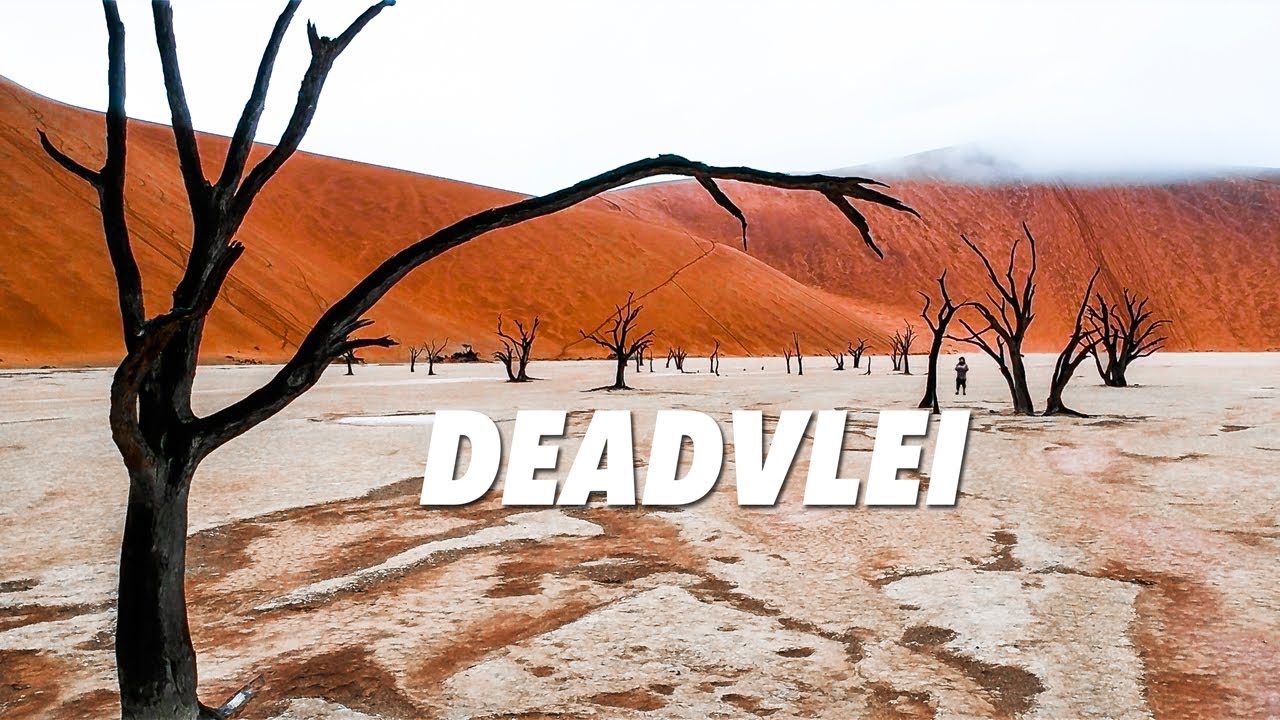
- In Namibia's Namib-Naukluft National Park, Deadvlei ("Dead Marsh") presents a surreal landscape that appears conjured from fever dreams or science fiction—a white clay pan surrounded by towering red-orange sand dunes (among Earth's tallest at 300+ meters) scattered with the blackened, desiccated skeletons of ancient camel thorn trees.
- These trees died 600-700 years ago when drought and shifting sand dunes cut off the Tsauchab River that once fed the pan, but they never decomposed due to the extreme aridity (the area receives less than 10mm annual rainfall).
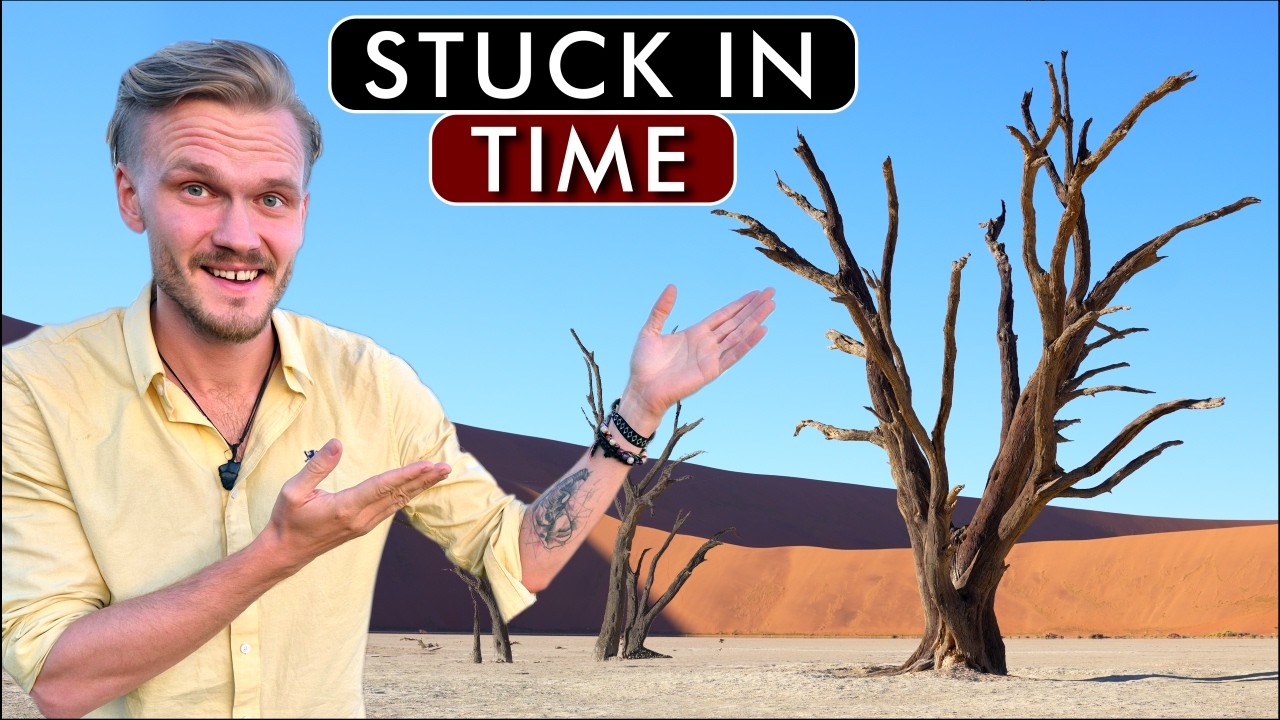
- Instead, they mummified, standing as twisted black sentinels against the white pan floor and red dune backdrop—the color contrast (black, white, red, deep blue sky) creates compositions so graphic they seem painted rather than natural.
- The clay pan itself formed thousands of years ago when the river flooded, depositing sediment that cracked into polygonal patterns as it dried.
- The surrounding dunes—part of the Namib Desert's ancient sand sea dating back 55+ million years (world's oldest desert)—glow in shades from orange to crimson depending on iron oxide content and light angles.
- Sunrise and sunset transform Deadvlei into a photographer's paradise—the low-angle light illuminates one side of the dunes in brilliant color while casting the opposite side into deep shadow, creating rippled patterns and dimensional relief.
- The adjacent Sossusvlei (sometimes water-filled clay pan after rare rains) and Dune 45 (the most-climbed dune, 170m high, 45km from park entrance—hence the name) complete the area's attractions.
- The region's isolation—Sesriem (park entrance) is 65km from the nearest town—preserves a silence so profound it's almost a presence.
- The night sky, unpolluted, reveals the Milky Way with extraordinary clarity.
- The only sounds are wind sculpting dunes, occasional bird calls, and your footsteps crunching on hardened clay or sinking into soft sand.
- Wildlife persists despite the hostility: oryx antelope survive without drinking water (extracting moisture from sparse vegetation), ostriches stride across pans, and tok-tokkie beetles harvest fog droplets from morning mist.
Watch it
Who Visits
- Photographers (60%), nature enthusiasts (25%), adventure travelers (15%).
- Demographics 30-65, affluent (expensive destination), predominantly European (German, British, French), American, and domestic Namibian tourists.
- Annual park visitors approximately 200,000, with majority visiting Sossusvlei/Deadvlei.
- Peak season April-October (cooler, dry); summer (November-March) brings extreme heat (40°C+ midday) but spectacular thunderstorms and rare water-filled pan opportunities.
How to Get There
- Difficult.
- The park entrance (Sesriem Gate) is 65km from Sesriem village, then 60km drive inside the park to Sossusvlei parking (paved road), then final 5km to Deadvlei requires either 4WD vehicles (soft sand—2WD vehicles get stuck frequently) or park shuttle (N$150/$8 round trip per person).
- Most visitors stay at accommodations near Sesriem (budget campsites N$400/$20 per person, mid-range lodges N$2,500-5,000/$125-250 per room, luxury lodges N$8,000-15,000/$400-750), departing pre-dawn (4-5am) to reach Deadvlei for sunrise (gates open 1 hour before sunrise, variable by season).
- From the 2WD parking area, walk 1km each way through soft sand to Deadvlei (20-30 minutes, tiring in heat).
- Carry 2+ liters water per person (dehydration risk extreme), sun protection (UV intensity severe at this latitude and altitude), and sturdy shoes (sand hot underfoot, scorpions/snakes possible).
- Park entry N$150 per person plus N$50 per vehicle ($8 + $2.50).
- Mobile coverage non-existent.
- Medical facilities in Sesriem (basic clinic); serious cases evacuate to Windhoek (5 hours).
- Supplies limited in Sesriem—bring food, water, fuel from larger towns.
- The nearest international airport is Windhoek (5-6 hours drive, 340km).
Best Time to Visit
- Photographers (bucket-list destination), nature enthusiasts, adventure travelers, fit individuals comfortable with heat and physical exertion, couples seeking dramatic landscapes, travelers with appreciation for stark beauty.
- Not ideal for: budget travelers (expensive destination), families with young children (heat, physical demands, remote location), elderly with mobility/heat tolerance limitations, travelers requiring constant connectivity/amenities.
Risk & Safety
- HIGH due to environmental extremes.
- Heat-related illness is primary danger—temperatures exceed 45°C in summer shade (surface temperatures 60°C+); heat exhaustion and heat stroke kill tourists regularly in Namib Desert.
- Dehydration—the extreme aridity causes rapid fluid loss; minimum 3-4 liters water daily required; symptoms include headache, dizziness, dark urine.
- Sun exposure—UV radiation intense; sunburn occurs in 15 minutes without protection.
- Physical exertion—dune climbing in heat/altitude stresses cardiovascular systems; several heart attack deaths occur annually in visitors attempting Big Daddy.
- Getting stuck—2WD vehicles frequently bog in soft sand requiring tow trucks (expensive, time-consuming).
- Wildlife—scorpions, sidewinder adders, and other venomous species present (rare encounters but possible).
- Remoteness—nearest comprehensive medical care is 5+ hours away; minor injuries become serious due to evacuation difficulty.
- Navigation—easy to become disoriented in dune fields; stay on marked paths.
- Generally inappropriate for families with children under 10 (heat, physical demands, remoteness) and not recommended for seniors with cardiovascular issues, heat sensitivity, or limited fitness.
- Visit during cooler months (May-September, daytime temperatures 20-30°C) for safer conditions.
- Bring: Wide-brimmed hat, sunscreen SPF 50+, sunglasses, multiple liters of water per person, first aid kit, and realistic assessment of physical capabilities.
Pictures (5)
Unique Experiences
- Sunrise Photography at Deadvlei: The world-class photographic opportunity requires 4am wake-up, 5am gate arrival (be first in line—gates open at sunrise minus 1 hour), 30-minute drive to 2WD parking, then 20-minute walk to Deadvlei, arriving just as first light touches the dunes (6:30-7am depending on season). The scene that unfolds: the dunes behind the dead trees ignite in orange-red while the trees remain silhouetted black; the white pan floor reflects color subtly; the sky transitions from deep blue to pink to azure; shadows stretch dramatically across rippled dune faces. Photographers position tripods, shoot HDR brackets, use wide-angle lenses to capture the entire composition or telephoto lenses to isolate individual trees against dune backgrounds. The shifting light provides 60-90 minutes of optimal shooting before the sun rises too high and contrast becomes harsh. Composition tips: Include trees in foreground with dunes behind; shoot from low angle emphasizing tree roots and pan cracks; use polarizing filter to deepen blue sky. Visit multiple mornings as weather (clouds, haze, clarity) dramatically affects results. By 9am, temperatures rise uncomfortably and light becomes flat—most photographers retreat.
- Big Daddy Dune Summit Climb: Big Daddy, the massive dune directly behind Deadvlei, rises 325 meters from pan floor to crest—climbing it requires 60-90 minutes of exhausting effort walking up soft sand slopes where each step sinks. Start early (7-8am after photography golden hour) when temperatures are manageable (still hot but not deadly). The technique: walk on the windward side's firmer sand near the ridge; take small steps; maintain steady pace; bring 2+ liters water; rest frequently. The reward: 360-degree panorama from the summit—Deadvlei spread below like a photograph, the dune sea extending to every horizon, and the profound satisfaction of conquering one of Africa's highest dunes. The descent: run/leap down the steep slip face (leeward side) toward Deadvlei—the soft sand prevents injury and you descend in 10-15 exhilarating minutes what took 90 minutes to climb. Warning: This climb is physically demanding in extreme heat and altitude (1,100m elevation); heart attacks have occurred; only attempt if fit and healthy. Mid-summer (December-February), avoid this climb—temperatures exceed 45°C making it dangerous.
- Deadvlei Night Sky Astrophotography: Book accommodations within the park (Sossus Dune Lodge, N$5,000-8,000/$250-400 per night) allowing nighttime access after day visitors leave. At night, return to Deadvlei (bring powerful flashlights, park permission required) for astrophotography. The lack of light pollution combined with high altitude and clear desert air creates the darkest skies imaginable—the Milky Way appears as a luminous river, Southern Cross and Magellanic Clouds (satellite galaxies visible only from Southern Hemisphere) dazzle, satellites track visibly, and shooting stars streak frequently. Photograph dead trees silhouetted against star trails or Milky Way—use 20-30 second exposures at high ISO (3200-6400), wide-angle lens (14-24mm), sturdy tripod, and intervalometer for star trail sequences. Paint trees with warm LED light during exposure for detail. The temperature drops dramatically at night (10-15°C even in summer)—bring warm layers. The experience—alone in this surreal landscape under infinite stars—is profoundly moving, approaching spiritual for many visitors.
- Rare Rain-Fed Sossusvlei Exploration: Once every few years (unpredictable), exceptional rains fill Sossusvlei pan with water, transforming the desert into temporary wetland. Birds flock in—flamingos, geese, waders—creating rare contrast between desert and aquatic life. The reflections—dunes mirrored in still water—create photographic opportunities available perhaps twice per decade. If you're fortunate to visit when this occurs (monitoring Namibia weather reports and social media for alerts), drop all plans and go immediately—the water disappears within days-to-weeks. The rarity and ephemeral nature make this among Africa's most special natural phenomena to witness.
- Oryx and Desert Wildlife Tracking: Join guided nature walks or drives (arranged through park lodges, N$800-1,200/$40-60 per person for 3-4 hours) with expert guides who track desert-adapted wildlife. Learn how oryx survive without drinking water, observe tok-tokkie beetles' morning fog-harvesting behavior (they stand head-down on dune crests allowing fog to condense and roll down to mouths), spot sociable weaver birds' enormous communal nests, and understand adaptations of plants like Nara melon and dollar bush. The guides explain the desert's delicate ecology—every organism interconnected, survival depending on extreme specializations. This transforms Deadvlei from photogenic backdrop into complex living system.